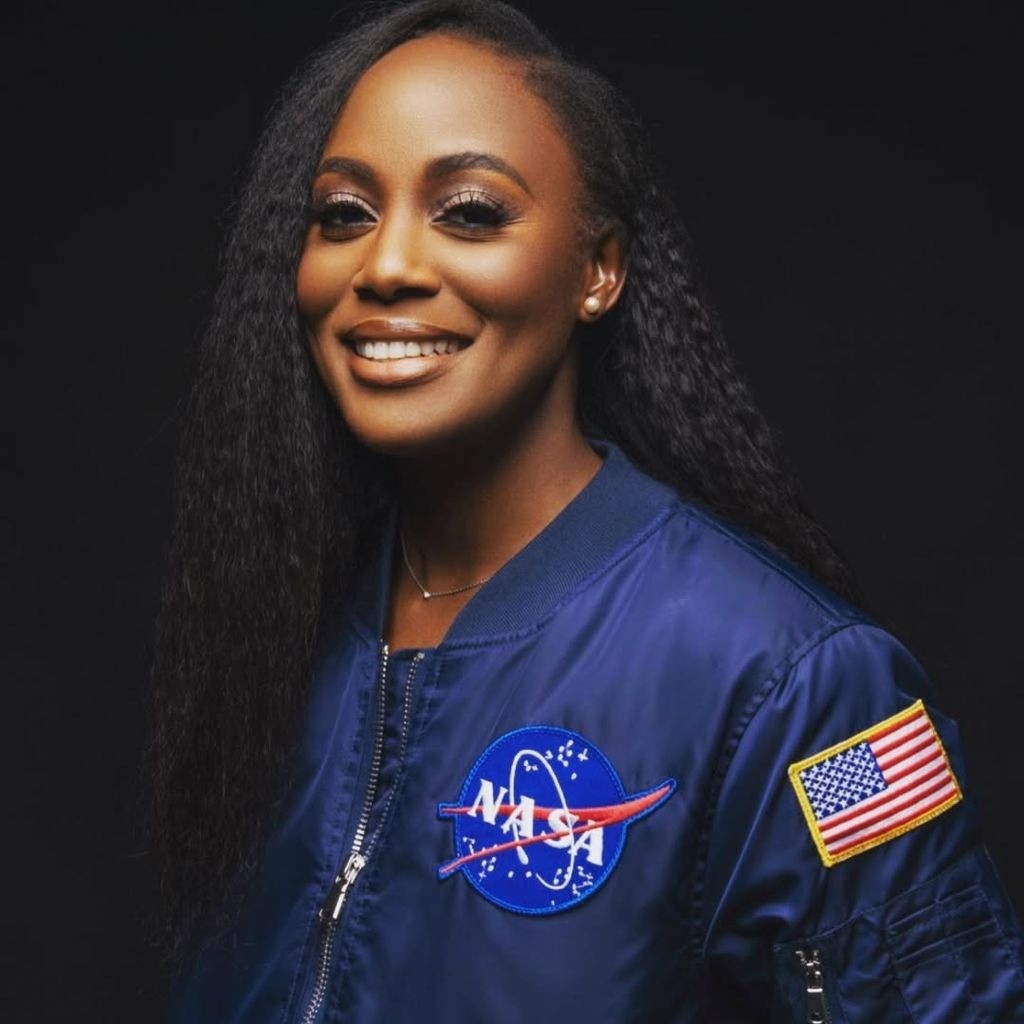
Wendy A. Okolo is a Nigerian-American aerospace research engineer, recognized as a trailblazer in STEM for becoming the first Black woman to earn a Ph.D. in aerospace engineering from the University of Texas at Arlington (UTA). She works at NASA Ames Research Center, leading advancements in flight safety, controls optimization, and intelligent systems for aerospace vehicles.
Early Life and Background
Wendy A. Okolo was born in Nigeria (likely around 1989, based on age 26 at Ph.D. completion in 2015; current age approximately 37 as of 2026). She attended St. Mary’s Primary School and Queen’s College in Lagos before relocating to the United States. She is of Nigerian heritage (often highlighted in diaspora contexts as Igbo or broadly Nigerian) and holds American citizenship. Raised in a supportive family, she showed early interest in engineering and excelled academically despite challenges like cultural adjustment and underrepresentation in STEM.
Education
- Bachelor's degree (B.S.) in Aerospace Engineering (with honors), University of Texas at Arlington (UTA), 2010. Served as president of the Society of Women Engineers at UTA during her undergraduate years.
- Ph.D. in Aerospace Engineering, University of Texas at Arlington, 2015 (completed at age 26). She became the first Black woman to earn this degree from UTA. Her dissertation focused on flight dynamics and controls (e.g., aircraft formation flight for fuel savings). Supervised by Atilla Dogan. Funded by prestigious fellowships including National Defense Science and Engineering Graduate Fellowship (U.S. DoD), Amelia Earhart Fellowship (Zonta International), American Institute for Aeronautics and Astronautics, and Texas Space Grant Consortium.
Career and Professional Achievements
Okolo began her NASA journey as an intern (including on the Orion spacecraft at Lockheed Martin). She has held roles at: - U.S. Air Force Research Laboratory (AFRL), Wright-Patterson Air Force Base (research on aircraft formation flight for fuel efficiency, demonstrated in U.S. Air Force flight tests). - Lockheed Martin Advanced Development Programs (Skunkworks) (performance optimization for F-35C Joint Strike Fighter).
Currently (as of 2026), she is an aerospace research engineer and Associate Project Manager in the Intelligent Systems Division at NASA Ames Research Center (Silicon Valley, California). She leads cross-functional teams on: - Aerospace vehicle flight safety. - Controls optimization and novel control techniques. - Systems health monitoring. - System-Wide Safety project (developing tools for safe unmanned vehicle operations in national airspace). - Advanced air mobility and autonomous systems.
She holds a U.S. patent in aerospace vehicle flight path control and has numerous technical publications.
Awards and Recognition
- NASA Exceptional Technology Achievement Medal (2021).
- NASA Ames Award for Researcher/Scientist (2020).
- First female recipient of NASA Ames Early Career Researcher Award (2019).
- Black Engineer of the Year Award – Most Promising Engineer in U.S. Government (2019).
- Women In Aerospace Award for Initiative, Inspiration & Impact (2019).
- U.T. Arlington Distinguished Recent Graduate Award (2019).
- Other: Resolution of Commendation from Tarrant County Court, Women Of Color in STEM excellence award.
She is also an author (memoir Learn to Fly: On Becoming a Rocket Scientist), speaker, mentor (especially for women and underrepresented groups in STEM), and advocate for diversity in aerospace.
Personal Attributes and Impact
Okolo is celebrated for resilience, innovation, and breaking barriers as a role model for young Nigerians, Africans, and Black women in STEM. She maintains an active online presence (@wendyokolo on X/Twitter, Instagram: wendyokolo) sharing her journey and inspiring future generations. Her work contributes to safer, more efficient aerospace technologies with applications in government and commercial sectors.
Note: Details cross-verified from her official website (wendyokolo.com), Wikipedia, NASA-related bios, LinkedIn, AIAA profile, UTA alumni pages, and recent media (up to 2026). No major new awards or role changes noted beyond established positions; focus remains on flight safety and controls at NASA Ames.